

Wineries
Your DTC platform tracks the sale.
Not the license behind it.
CredentiAlert tracks every TTB permit, every COLA, every state direct shipper license, every tasting room permit, and every employee server certification across the winery. Perfect for independent wineries with a tasting room, off-site events, and DTC shipping across multiple states.
No credit card required to get started.
The DTC shipping permit matrix
48
States that require a Direct Wine Shipper License to legally ship to.
Each state has its own annual filing, its own portal, its own volume report, and its own renewal date.When a Texas permit lapses, the POS still lets the Texas sale go through. The state finds out at audit, and the shipping privilege gets frozen retroactively, along with every sale processed in the gap.
The TTB calendar and the state calendar don't sync.
The compliance stack at a small winery is three jurisdictions deep, each one indifferent to the other. The TTB handles the federal Basic Permit, the COLAs on every label, and the bonded winery report on a monthly, quarterly, or annual cadence depending on volume. The state ABC handles the winegrower license, the direct shipper permit for every state that gets a shipment, and the off-site event permits. The county handles the tasting room conditional use permit and the food service permit if there is a cheese plate.
None of these calendars line up. The federal excise return is due the fifteenth. The Texas direct shipper renews in August. The Sonoma County environmental health permit renews on the tasting room anniversary. The tasting room manager's RBS certificate expires three years from her hire date, not three years from the start of the year. The bottling schedule is on the cellar whiteboard.
In January 2026, the Nebraska Liquor Control Commission suspended Mac's Creek Winery & Brewery for five days following a routine enforcement action. Five days dark for an estate winery in tasting-room season is an inventory write-off and a wine club cancellation wave.
The DTC platforms catch one slice of this. Sovos ShipCompliant and Commerce7 both block illegal sales at checkout the moment a customer exceeds a state volume cap. Neither one tracks whether the underlying state shipper permit is current. The state finds out at the next annual audit. The retroactive fine and the frozen shipping privilege come after.
The fix is not another DTC platform. The fix is a single dashboard that ties the federal calendar to the state calendar to the county calendar to every employee server certification, and alerts the owner before any of them turn red. CredentiAlert is what wineries have been running on spreadsheets, calendar invites, and a binder in the cellar.
The license layer your ShipCompliant doesn't cover.
ShipCompliant blocks the illegal sale. CredentiAlert keeps the underlying licenses current.
Federal, state, county. Sorted by what expires next.
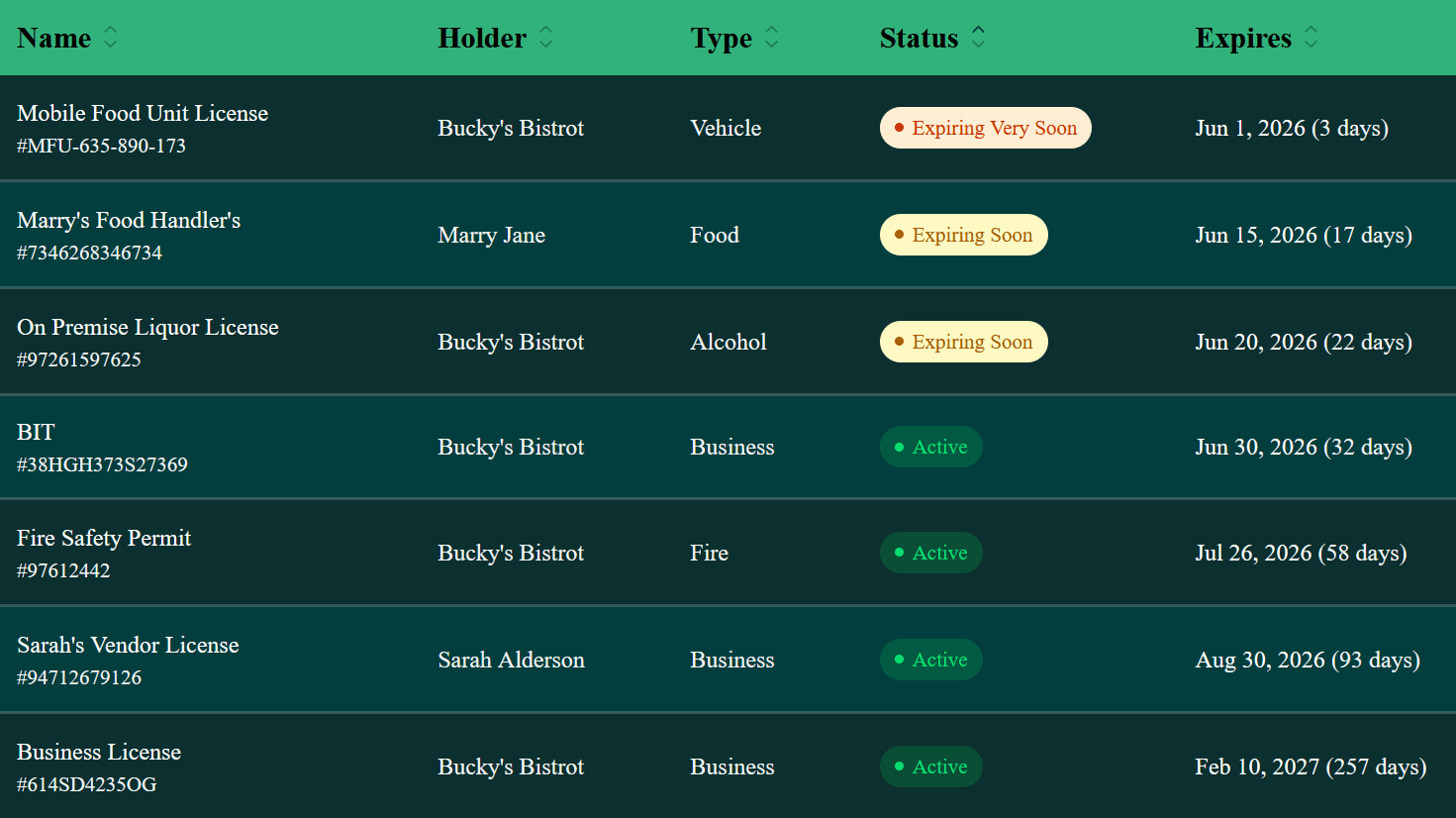
The TTB Basic Permit, every state Direct Wine Shipper License, the winegrower license, the tasting room conditional use permit, the food service permit, and every COLA all live in one table. Status badges flag what is current, expiring soon, or past due. Each row shows the holder, the issuing agency, the permit number, and how many days are left. Sort by expiration and the next renewal sits at the top, no matter which jurisdiction it sits under.
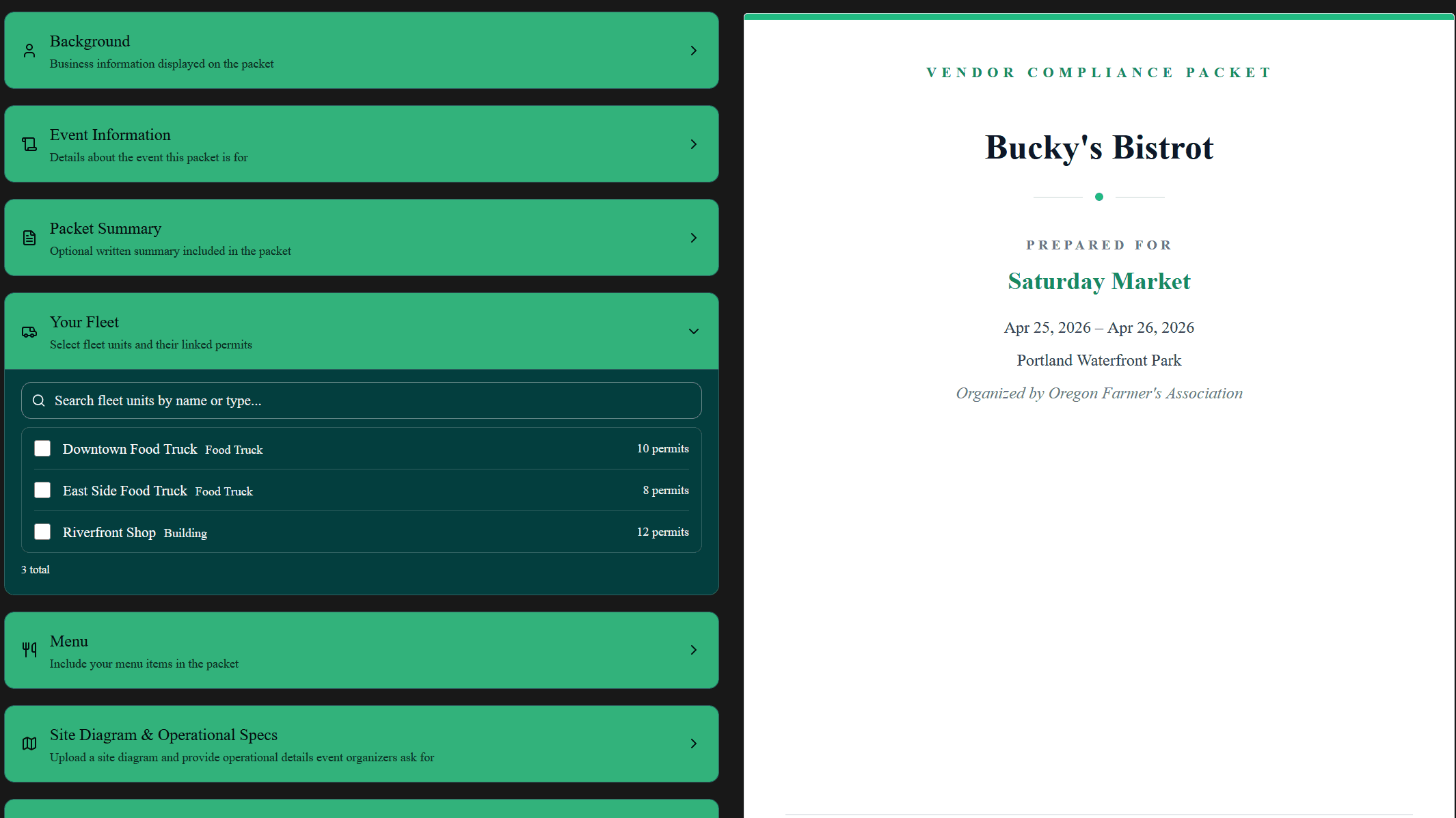
The off-site packet, built in one screen.
Pouring at the Pinot Noir festival next weekend, the regional wine walk after that, or a private estate dinner downtown? Open the event, pick the tasting room (or winery) hosting, attach the venue-specific COI, select the staff working it with their current server certifications, hit generate. The packet downloads as a single branded PDF ready to email to the festival coordinator before the pour permit deadline.
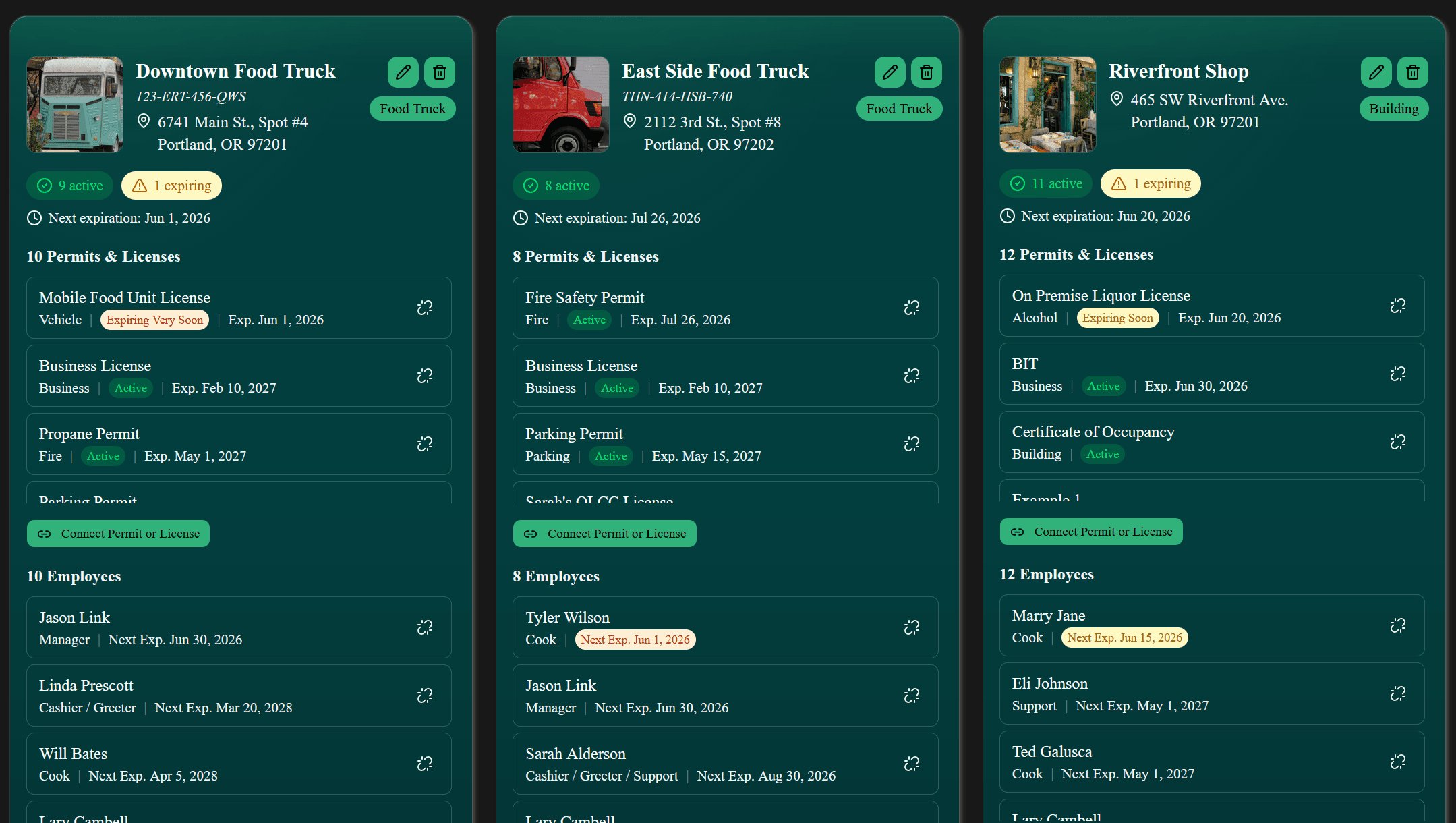
One card per estate, tasting room, or off-site pop-up.
Each location lives on a card with its address, its assigned staff, its conditional use permit, and the local food and event permits attached. The estate, the urban tasting room, the cellar door, the bonded warehouse all live side by side. When the ABC visits the estate for an audit, every permit it asks for is on one card.
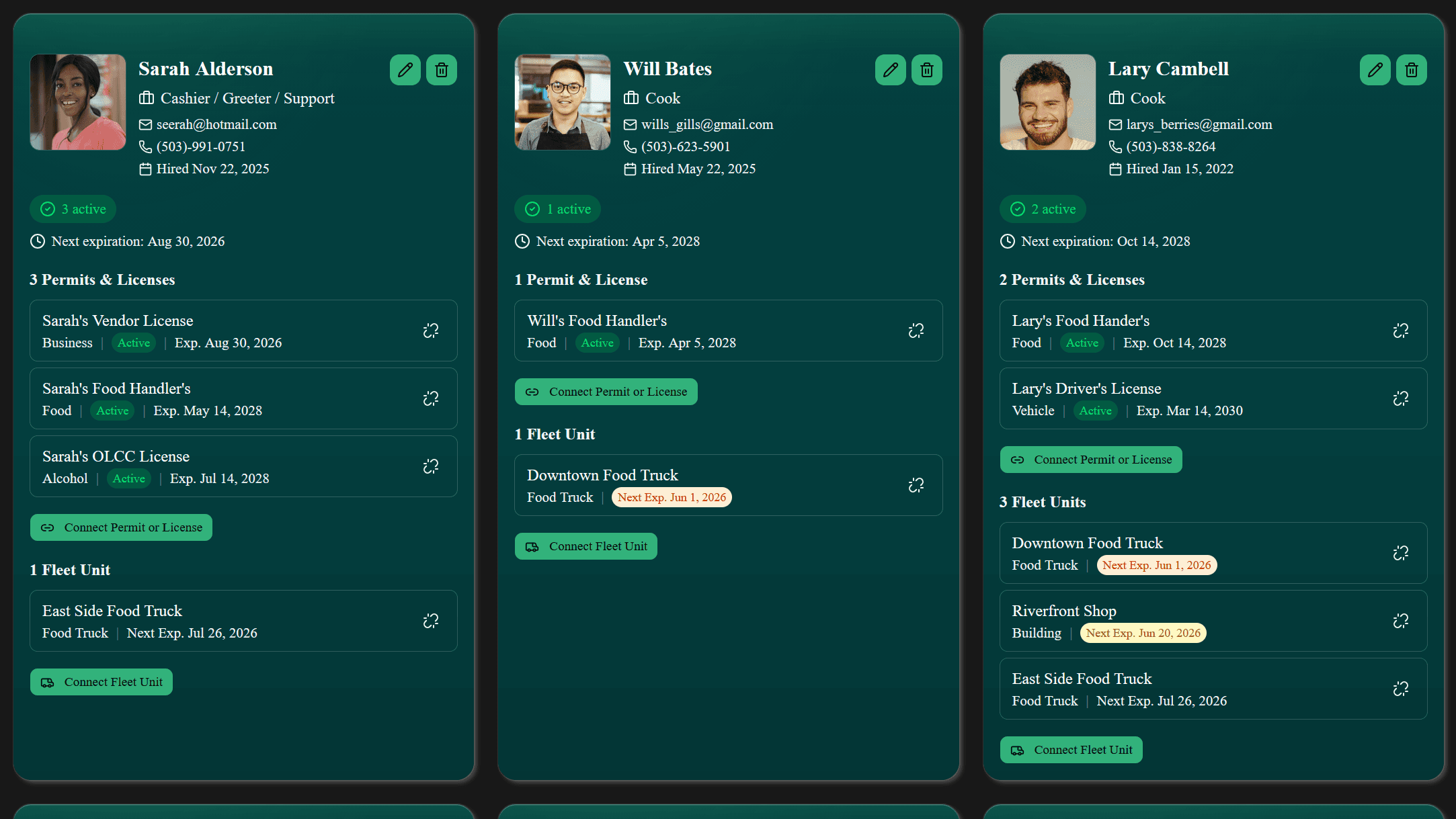
Cards for every pourer, manager, and cellar lead.
Each staff member gets a card with their state alcohol server certification (RBS in California, MAST in Washington, OLCC service permit in Oregon), their food handler card if the tasting room serves food, and any manager certifications. Assign each pourer to the tasting rooms they actually work. When a tasting room manager's RBS expires three weeks before the harvest weekend, the card flags it before the state ABC does.
A Monday in March
The Texas DTC permit expires in nine days. Nobody knows.
The annual Texas Direct Wine Shipper renewal was a tab on a compliance spreadsheet last updated by a tasting room manager who left in November. The renewal notice from the TABC went to her old work email. Nobody on the current team has the login for the Texas portal. The wine club has eighty-seven Texas shipments scheduled for the next thirty days.
In CredentiAlert, the Texas Direct Wine Shipper permit shows up on the dashboard sixty days out with a status of Expiring Soon. The owner gets the reminder email. The portal login lives in the document vault, attached to the permit record. The renewal gets filed nine days early, the portal confirms, the permit status flips back to current, and the Texas wine club ships without anyone in the cellar knowing there was a problem.
The same renewal, caught at the next audit instead of nine days early, costs the state shipping privilege and every Texas wine club sale processed in the gap.
The lowest prices on the market
Comparable platforms charge $43 to $59 per month and only offer 14-day trials. CredentiAlert starts free, forever, and the full-featured Pro plan is under $10.
Select Annual to save ~17%
Looking for unlimited* usage or a custom plan? Contact CredentiAlert at contact@credentialert.com to set up an Enterprise plan that works best for you.
*Unlimited tiers are subject to our Fair Use Policy to prevent spam and abuse.
Frequently asked
The questions we hear from winery operators.
What is a TTB Basic Permit and how often does it renew?
The TTB Basic Permit is the federal license issued by the Alcohol and Tobacco Tax and Trade Bureau that authorizes a winery to produce and sell wine. Unlike most state licenses, the federal Basic Permit does not have a scheduled renewal date and remains active as long as the winery continues operations and stays current on filings. The compliance burden is the ongoing federal Report of Operations (monthly, quarterly, or annually depending on volume) and the federal excise tax return. Missing those filings is what gets the Basic Permit suspended, not a missed renewal.
How does a winery get a direct wine shipper permit for another state?
Each state that allows direct-to-consumer shipping requires its own Direct Wine Shipper License, filed with that state's alcohol board (the ABC, the state liquor authority, the Department of Revenue, depending on the state). Most renew annually, with filing fees ranging from twenty-five dollars to several hundred. A winery shipping to all forty-eight reciprocal states tracks forty-eight separate annual renewal dates. States periodically rewrite their DTC rules. Arkansas and Mississippi both overhauled their DTC laws in 2025 and required existing license holders to transfer to new permits or lose shipping privileges.
What happens if a winery ships to a state with an expired direct shipper permit?
The state finds out at the next annual audit (or sooner if a competitor or distributor files a complaint). The shipping privilege gets frozen retroactively, every sale processed during the gap is subject to fines, and the state can deny renewal of the permit for a future cycle. Some states pursue criminal penalties for repeat offenders. Sovos ShipCompliant and Commerce7 will block illegal sales at checkout based on volume limits, but neither one knows whether the underlying state shipper license is currently active.
Do tasting room employees need state alcohol server certifications?
In most major wine-producing states, yes. California requires the Responsible Beverage Service (RBS) certification, renewable every three years. Oregon requires an OLCC service permit, renewable every five years. Washington requires the MAST permit, renewable every five years. Each certification has its own renewal cadence, its own continuing education requirement, and its own portal. When a tasting room manager hires a seasonal pourer for harvest, the certification status must be verified before the first shift.
How long is a COLA valid?
A Certificate of Label Approval from the TTB does not expire on a calendar date, but it is tied to a specific label, vintage, and bottling. Any change to the label (a new vintage, a revised back label, an updated alcohol percentage above the tolerance) requires a new COLA. The federal government shutdown in October 2025 froze COLA processing for weeks, leaving wineries with finished bottles unable to ship. Tracking which COLAs are tied to which active bottlings prevents a label change from quietly invalidating an entire pallet ready for release.
Does a winery tasting room need a food service permit?
In most jurisdictions, yes if any food is served. Even basic cheese and charcuterie service triggers the county environmental health permit, which is separate from the state ABC license and renews on the tasting room anniversary, not on the calendar year. Some California counties require a food handler card for any tasting room employee handling cheese plates, regardless of whether they are also pouring wine.
What is the difference between ShipCompliant and a license tracking system?
ShipCompliant (and Avalara for Beverage Alcohol, and Commerce7) handle DTC transaction compliance, checking each sale at checkout against the destination state's volume limits, age verification rules, and tax requirements. They assume the winery's underlying Direct Wine Shipper License in that state is active. CredentiAlert tracks the underlying licenses themselves, alerts on upcoming renewals, stores the portal logins, and flags any state where shipping is about to lapse. The two systems are complementary, not competitive.
How do wineries handle compliance during a federal government shutdown?
During shutdowns the TTB suspends all COLA processing and most non-statutory activity. Wineries with pending label approvals see them frozen until the shutdown ends, which can delay seasonal releases by weeks. Wineries that track every active COLA and pending application get caught off guard less often, because they can see which bottlings are at risk and adjust the release schedule before the labels are printed.
Credential Guides
Not sure which licenses your winery needs?
Every credential a winery needs to make and sell wine, from the federal TTB permits down to local rules, broken down by state and city. Each one shows who issues it, what it costs, and how often it renews, straight from official government sources.