
Multi-location multiplies your paperwork
5
Average permits per location.
Business license, health permit, fire permit, sign permit, music license. Each one renews on its own cycle, each one has its own fee, and each one has to be current at every shop you operate. Three shops in three cities is fifteen renewal dates to track minimum.
Two shops and a cart is three permit worlds, not one.
The pain is not the permit. The pain is what happens when you open shop number three.
By shop one, you have a spreadsheet. By shop two, the spreadsheet has color-coded tabs. By shop three, the spreadsheet is six months out of date and your general manager is texting you on a Sunday asking which county the new health permit came from.
Barista turnover in specialty coffee runs sixty to eighty percent annually. Every new hire needs a current food handler before they touch the espresso machine, and the rules change by state. Texas gives you sixty days from the hire date. California wants the card before the first shift. Washington wants it on the premises during open hours. Multiply that across multiple shops and you are tracking dozens of small certifications that all expire on different days, attached to people who may or may not still work for you next month.
“67% of coffee shop owners say regulatory compliance is a top concern.”
Then someone suggests selling at the farmers market on Saturdays. Suddenly the same business needs a fixed-location health permit AND a mobile food vendor permit. The cart needs a commissary agreement. The cart needs its own fire clearance. In Seattle the cart needs a thousand-dollar SDOT permit just to sit on a sidewalk. Now your compliance system has to handle two entirely different worlds at the same time.
Music licensing across every shop. Sign permits when the wrap changes. Sidewalk seating permits when the patio expands. Beer and wine licenses when you finally add that 4 PM happy hour, and every server pouring needs TIPS or its equivalent. Most platforms built for restaurants assume one address and one type of operation. CredentiAlert was built for operators whose business does not actually fit one address or one type.
Every shop. Every cart. Every permit.
Here is what a real multi-location coffee tracker looks like.
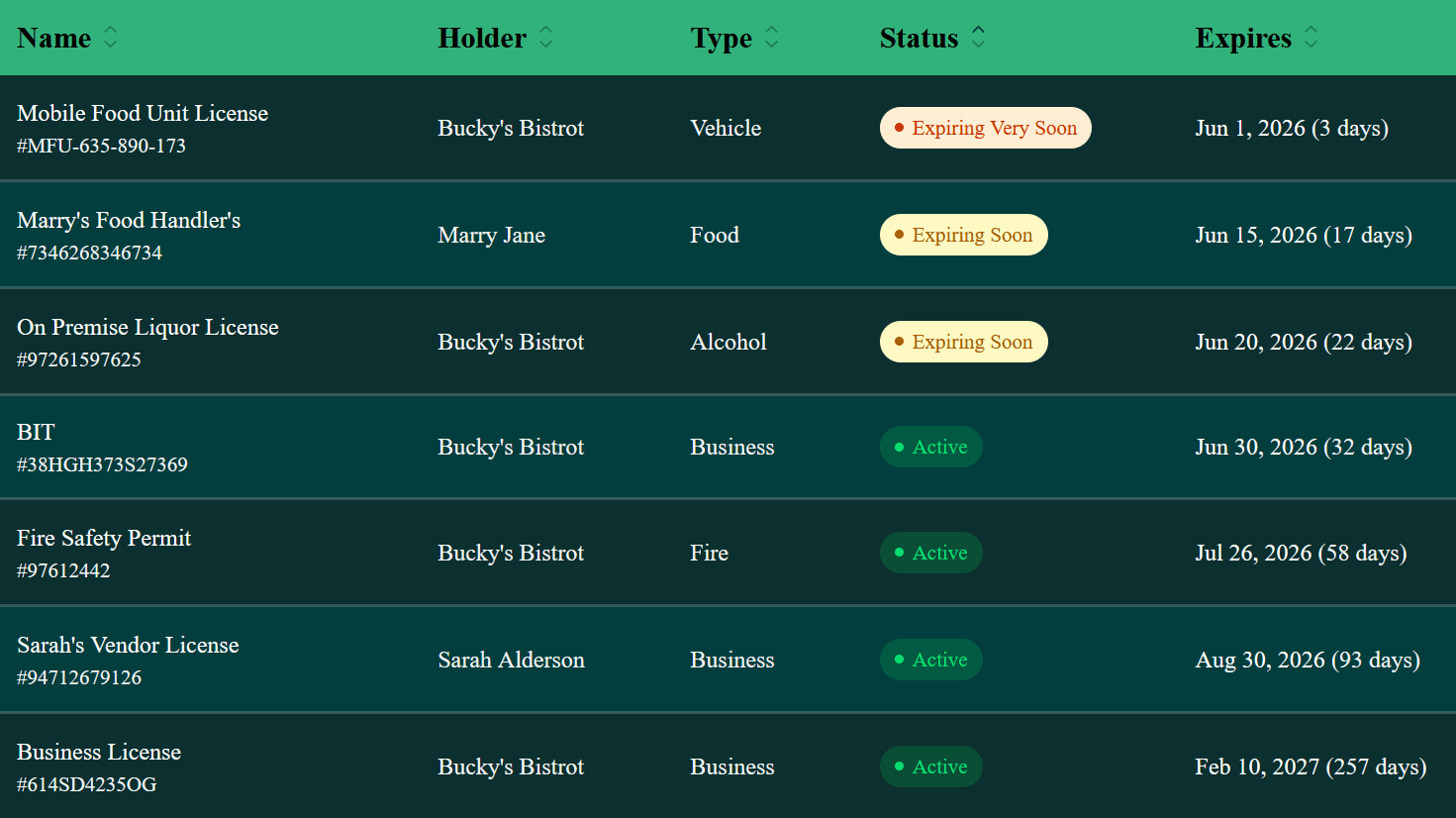
Every permit. Every license. Sorted by what expires next.
All your permits and licenses live in one searchable, sortable list. Color-coded status badges flag what is expiring very soon, expiring soon, or still active. Each row shows the holder (the shop or cart that carries it), the issuing agency, and how many days are left. Sort by expiration and the next renewal sits right at the top.
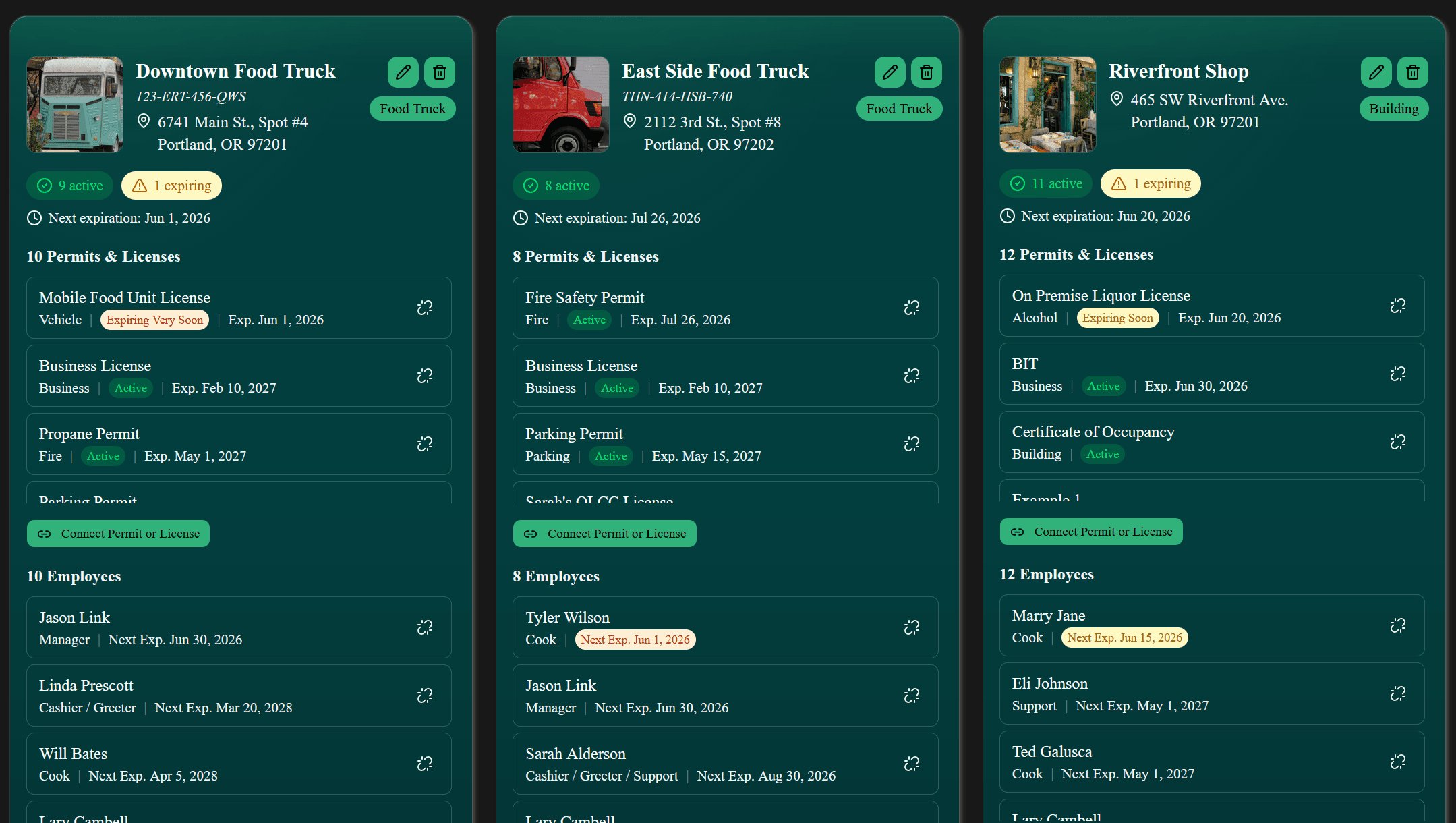
Every shop. Every cart. One page.
Every location lives on the same screen with its current operating status, its assigned baristas, and its active credentials. Opening a fourth shop does not mean opening a fourth spreadsheet. It means clicking Add Unit and getting back to dialing in the bar.
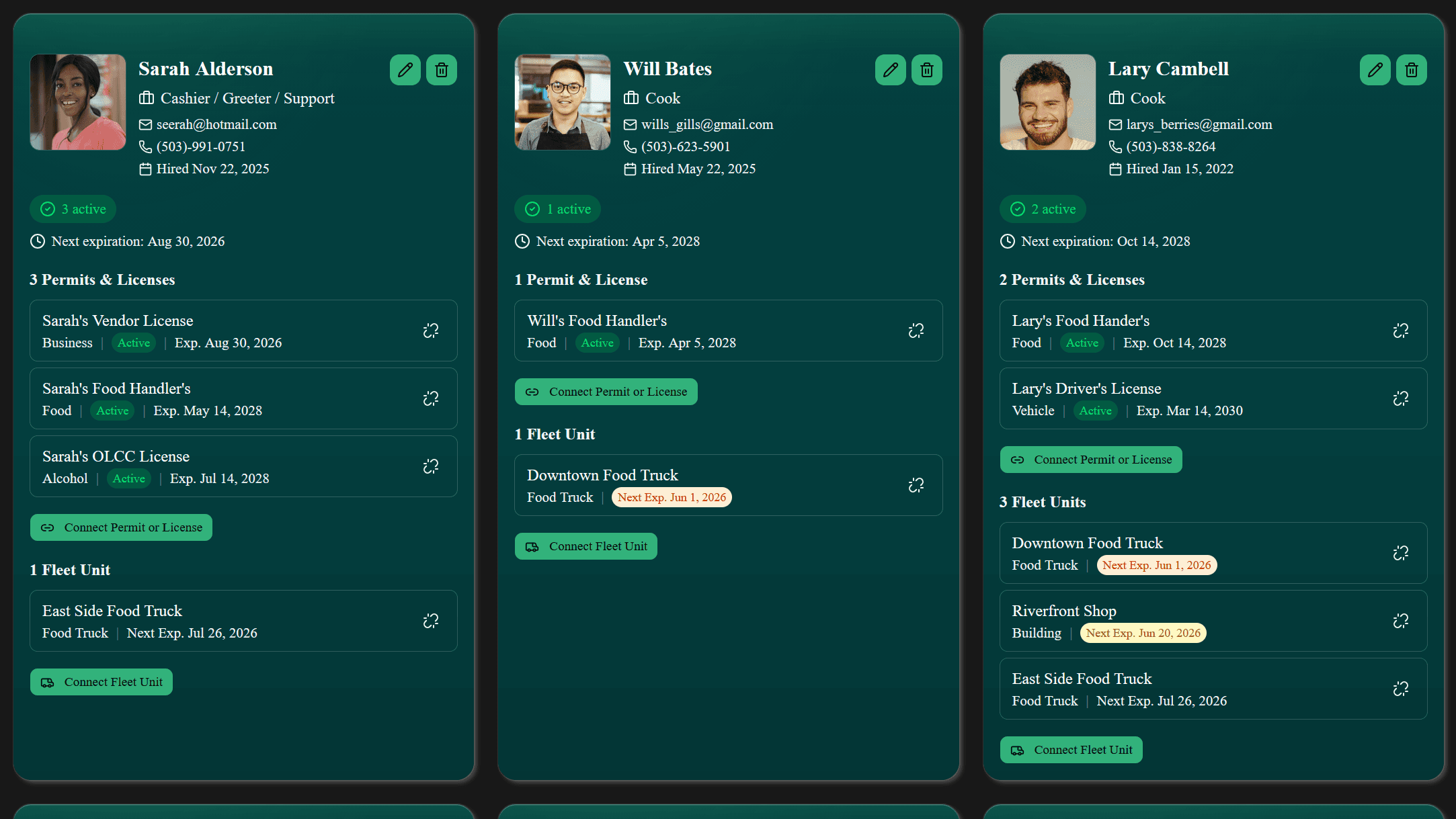
Every barista. Every card. Every shop they work.
Each barista gets a card with their food handler, their TIPS certification if you serve beer and wine, and any other credential you track. Assign them to the shops and carts they actually work, and the dashboard flags expirations before turnover catches up to you.
Your paper trail, one search away.
Every permit, license, and certificate you scan or upload lands in the vault. Search by shop, by city, or by barista, and the document is there to view or download. No more digging through the back-office filing cabinet when a health inspector walks through the door.
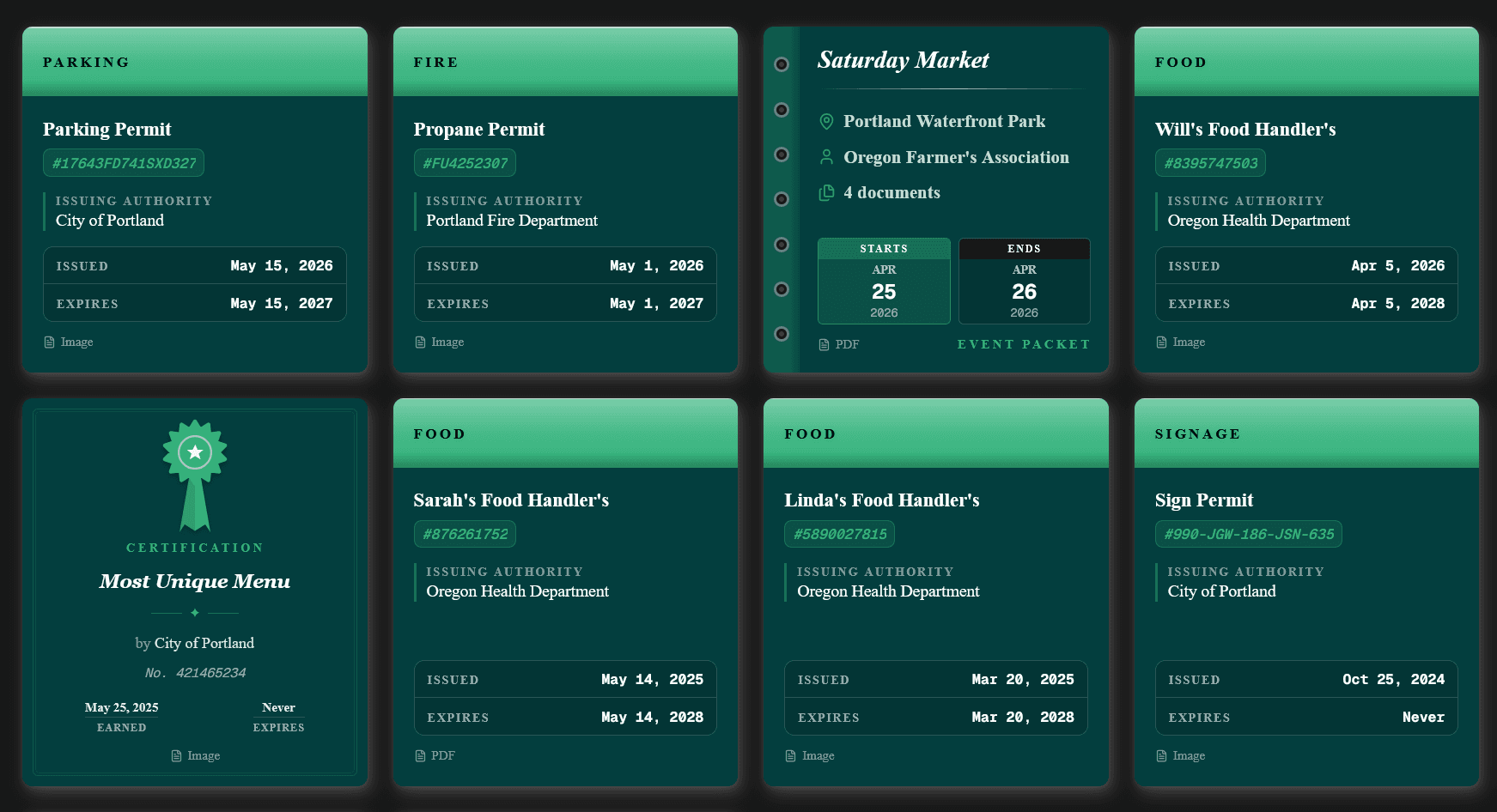
A Saturday with two shops and a cart
6:45 AM. Three problems. Six minutes.
Two of your shops are about to open. Your Belmont barista just texted that the new hire's food handler is on her phone, not in your file. Your cart manager is loading the espresso setup into the van for the Hollywood Farmers Market and needs the cart's current mobile vendor permit for the event organizer. The shop in Beaverton has its annual fire inspection scheduled for 8 AM.
In CredentiAlert, you open the barista's profile, pull the food handler, and forward it to her with ease. You open the cart's profile, hit Generate Event Packet, and email the PDF to the market organizer. You open the Beaverton shop, confirm the fire suppression certificate is current, and screenshot it so the GM can hand it to the inspector.
Three problems. Six minutes. Before you have even finished your first cortado.
The lowest prices on the market
Comparable platforms charge $43 to $59 per month and only offer 14-day trials. CredentiAlert starts free, forever, and the full-featured Pro plan is under $10.
Select Annual to save ~17%
Looking for unlimited* usage or a custom plan? Contact CredentiAlert at contact@credentialert.com to set up an Enterprise plan that works best for you.
*Unlimited tiers are subject to our Fair Use Policy to prevent spam and abuse.
Frequently asked
The questions we hear from coffee operators.
What licenses do I need to open a coffee shop?
It depends on where you operate. Most US coffee shops need at minimum a local business license, a state seller's permit, a health department food service permit, a fire department permit, a certificate of occupancy, sign permits, and food handler cards for every barista. If you serve beer or wine you need a state liquor license. If you operate a cart at events you need a separate mobile food vendor permit. CredentiAlert tracks all of it in one place.
Do baristas need a food handler card?
In most US states, yes. California, Texas, Arizona, Washington, Illinois, and most other states with significant coffee markets require a food handler card or equivalent certification for anyone handling food or beverages. Timing varies. Texas requires the card within sixty days of hire. California requires it before the first shift. CredentiAlert tracks each barista's certification and renewal date across every shop they work.
How much does a coffee shop health permit cost?
Most US cities charge between two hundred and seven hundred dollars per location for the annual health permit. Larger jurisdictions and higher-risk operations cost more. The permit covers one location. A second shop is a second permit at a second renewal date. Fire inspections, sign permits, and certificates of occupancy each cost extra. Multi-location operators end up with permit costs that compound faster than they expect.
Do I need a separate license for each coffee shop location?
Yes. Every shop is treated as its own food service establishment and requires its own health permit, fire inspection, certificate of occupancy, sign permit, and in most cities its own business license. If you operate across multiple cities, each city issues its own paperwork. An operator with shops in Seattle, Bellevue, and Portland holds three city business licenses, three health permits, and three sets of renewal dates.
What happens if you operate a coffee shop without a permit?
You get shut down. Health inspectors can suspend your permit on the spot for missing or expired paperwork. In November 2024, Taylor Street Coffee Shop in San Francisco was ordered to close immediately after a health inspection turned up violations. Clark County, Washington, made the policy explicit starting in 2026: if you fail to renew your annual permit, you are shut down that day, plus an additional fee on top of the renewal.
Do coffee shops need a liquor license to serve beer and wine?
Yes, and it is a separate compliance regime from your health permit. Oregon uses the OLCC. California uses ABC. New York uses the SLA. Each location needs its own liquor license, every server handling alcohol needs TIPS or equivalent responsible service training, and each license has its own renewal schedule. Adding beer and wine to one shop is straightforward. Adding it to five shops is a project.
How do I manage permits across multiple coffee shop locations?
Most operators run spreadsheets, paper binders, or rely on each general manager's memory until something gets missed. CredentiAlert replaces that with a single dashboard showing every shop, every cart, every permit, every barista certification, and every renewal date. You can filter by location, by city, or by what is expiring in the next thirty days, and the system sends reminders before anything lapses.
What is a commissary agreement for a coffee cart?
A commissary is a licensed commercial kitchen where you prep, clean, and store ingredients between cart shifts. Most US jurisdictions require coffee carts and mobile coffee vendors to have a signed commissary agreement on file before they can operate. If your cart works multiple cities, you may need a separate commissary agreement in each jurisdiction. CredentiAlert stores the agreement, tracks its renewal date, and pulls it into your event packet when an organizer asks for it.