

Caterers
Permits change by venue.
Keep every event on the books.
CredentiAlert tracks every temp food permit, every venue COI, every off-premise liquor permit, and every staff certification across every event you cater. Perfect for catering operators juggling multiple events across multiple jurisdictions.
No credit card required to get started.
One busy weekend in October
3 / 3 / 3
Three events. Three jurisdictions. Three different packets.
Each event needs its own COI naming the right venue as additional insured, its own temp food permit filed weeks in advance, and its own roster of staff certifications verified. Most catering groups assemble this through Google Drive folders, the insurance broker's inbox, and the chef's memory. The wrong binder in the van fails the inspection, and the venue coordinator quietly drops the caterer from the preferred-vendor list.
The BEO is flexible. The state is not.
A client changes their mind fourteen days before the event, upgrading from beer and wine to a full premium bar. The sales team updates the BEO. The client pays the new invoice. The kitchen revises the prep list. Nobody tells the person tracking compliance.
The state alcohol board required twenty-one days notice to upgrade the off-premise liquor catering permit. The food is legal, the BEO is accurate, the bar is now operating illegally, and nobody will know until the inspector arrives.
The bar got chained shut at seven in the evening as guests arrived. A $500 fine and a three-day suspension on the master catering license followed.
Then there is the document side. The Napa wedding needs a $2M COI with the vineyard named as additional insured. The San Francisco corporate drop-off needs the commissary permit in the driver's hand. The Sacramento festival needs a multi-day TFE filed two weeks ago, with a drawn diagram of the hand-washing station. The wrong binder in the wrong van fails the morning inspection and the booth gets shut down before the first slider is flipped.
The catering CRMs handle the BEO. The insurance brokers handle the COI for an emergency fee on a Friday afternoon. The state portals handle the permit, if you remember to file. Nothing on the market ties the calendar to the compliance, which is why caterers run this through Google Drive folders and the lead server's memory. CredentiAlert is the layer that flags the discrepancy the second a menu changes.
The compliance layer your BEO software was missing.
Caterease tracks the menu. CredentiAlert tracks what makes the menu legal.
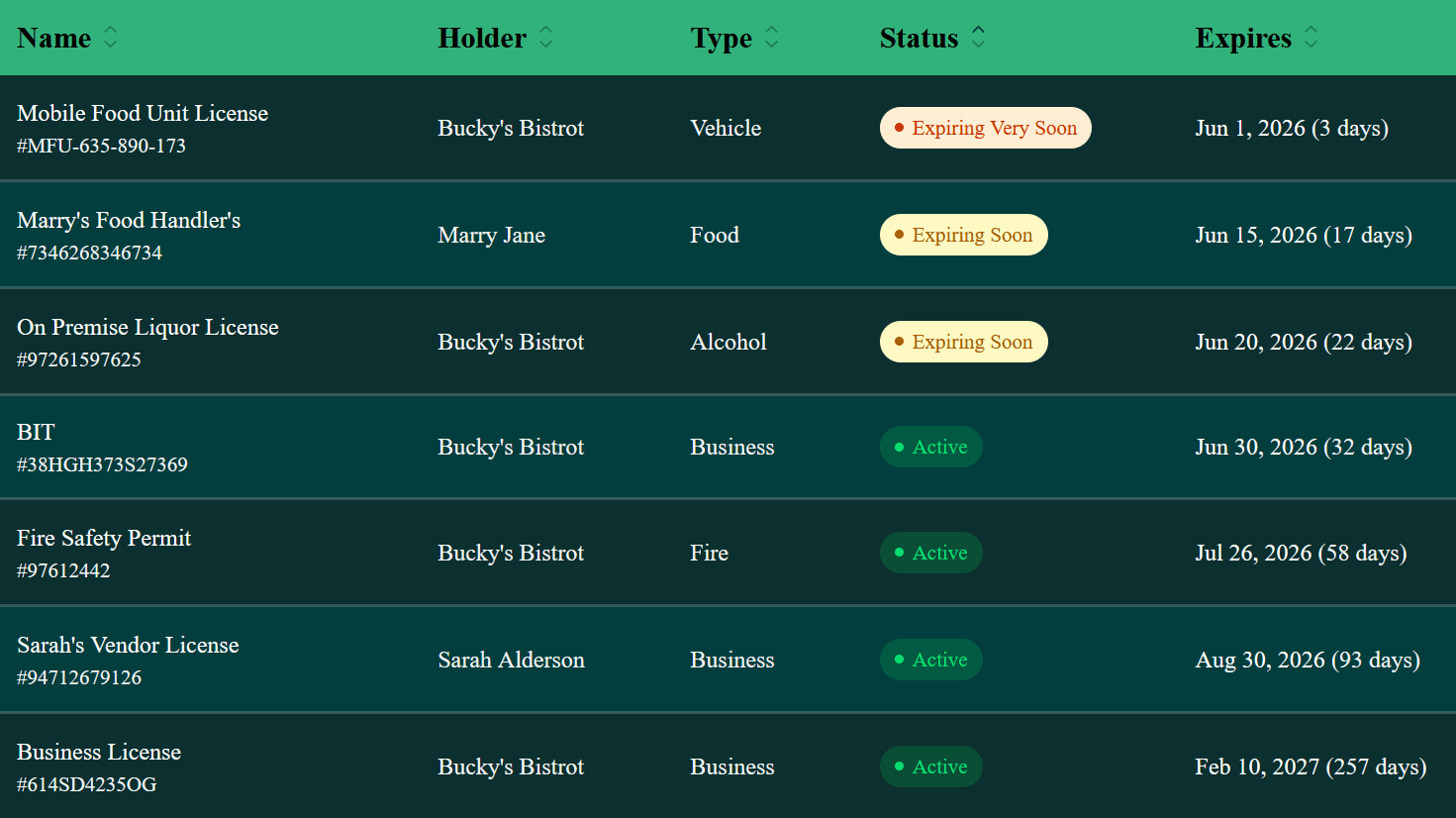
Sort by expiration. The next renewal is row one.
Every commissary permit, catering license, off-premise liquor permit, and active temp food permit lives in one table. Status badges flag what is current, expiring soon, or already past due. Each row shows the holder (the kitchen, van, or staff member that carries it), the issuing agency, the permit number, and how many days are left. Sort by expiration and the next thing to renew sits at the top.
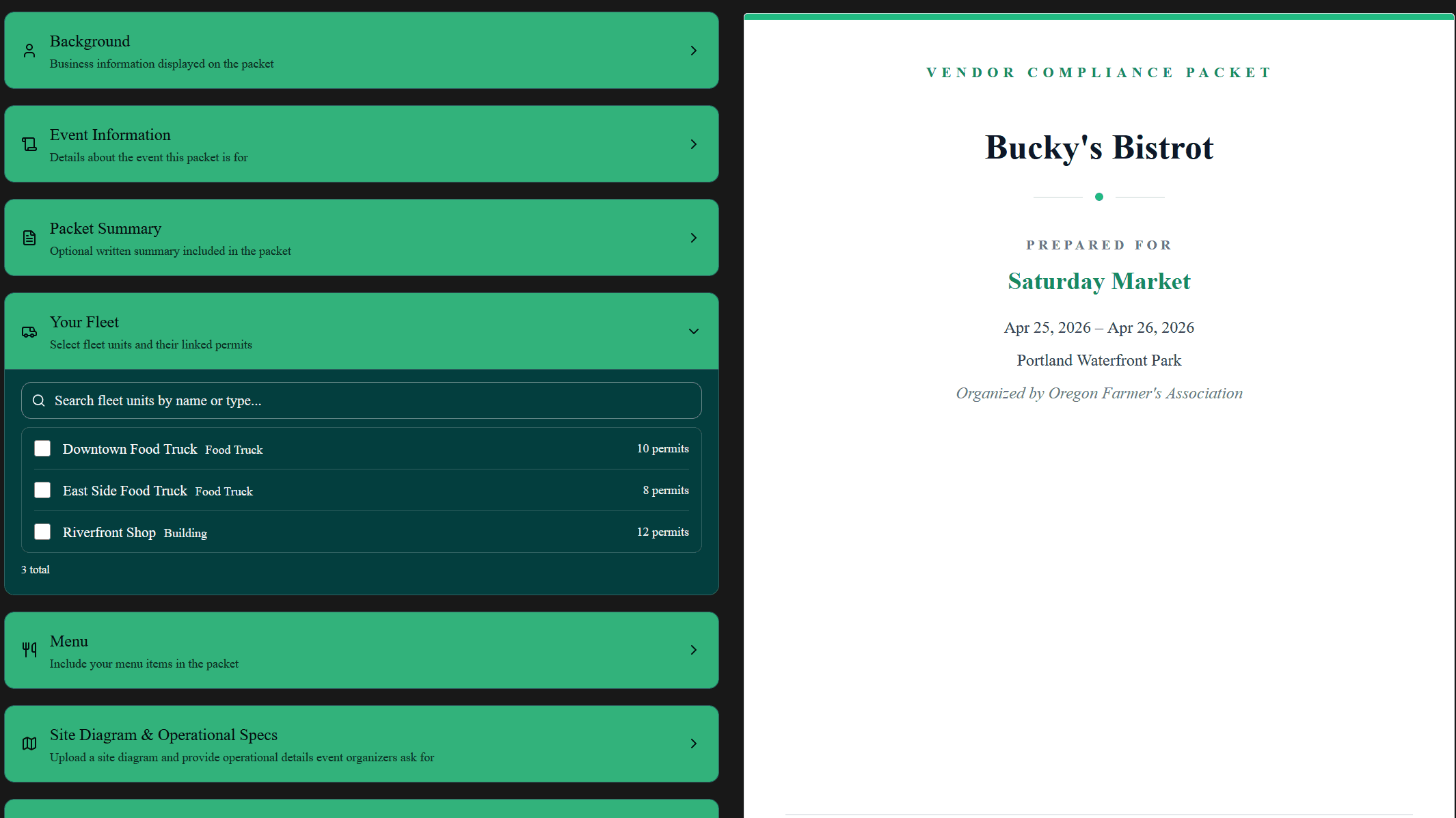
The venue packet. One screen. Email it before load-in.
Open the event, fill in the venue name and date, pick which kitchen or van is serving, select the staff working it, attach the venue-specific COI, and the packet generates as a single, branded PDF. Background, event details, site diagram, operational specs, menu, and every staff certification, all in one document the venue coordinator can drop straight into the vendor file.
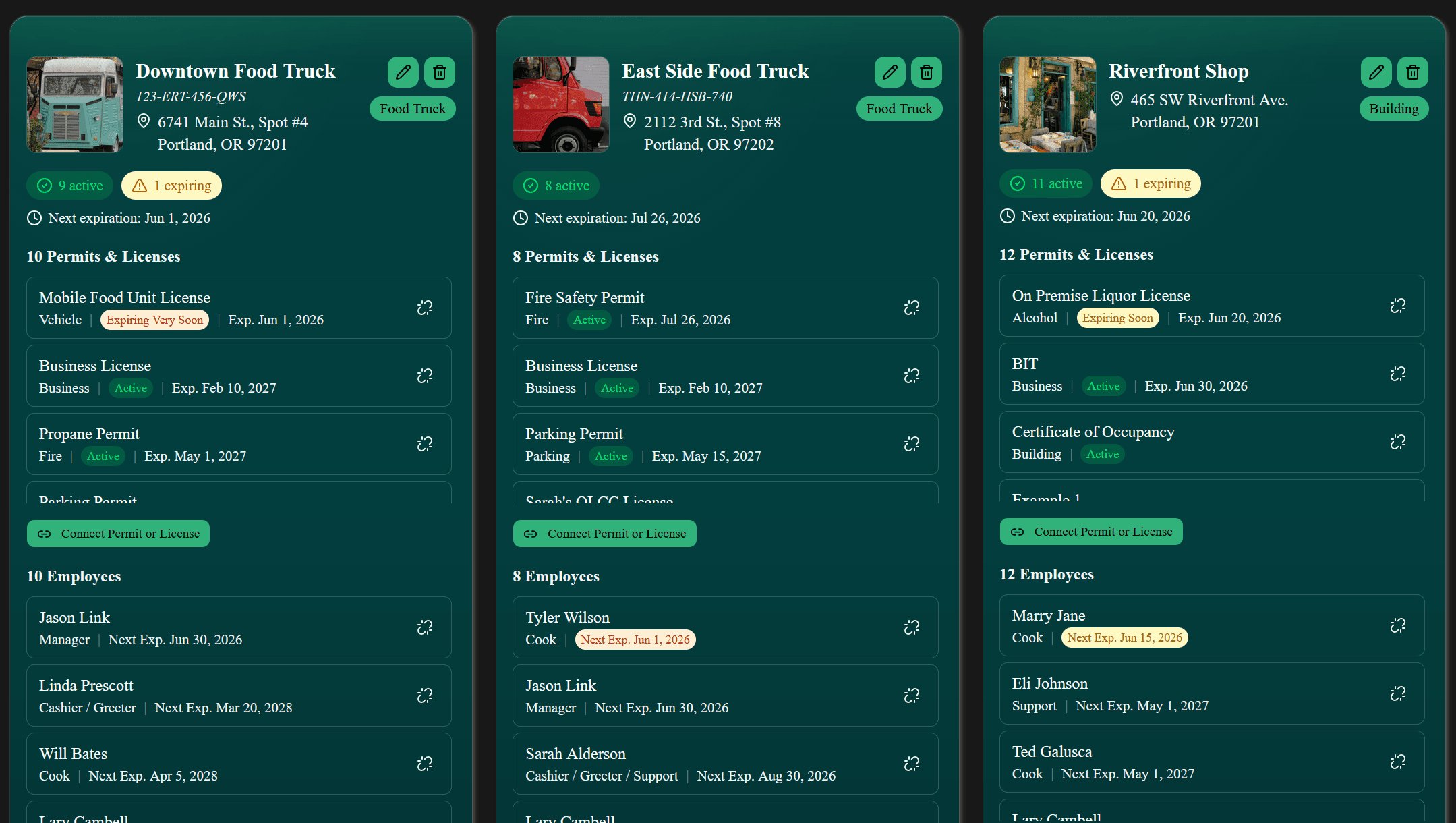
One card per kitchen, van, or pop-up site.
Each operating unit lives on a card with its address, its assigned staff, and the permits attached to it. The commissary, the delivery van, the prep trailer, the pop-up booth at the festival all live side by side. When the inspector asks which permit covers which kitchen, you point at the card.
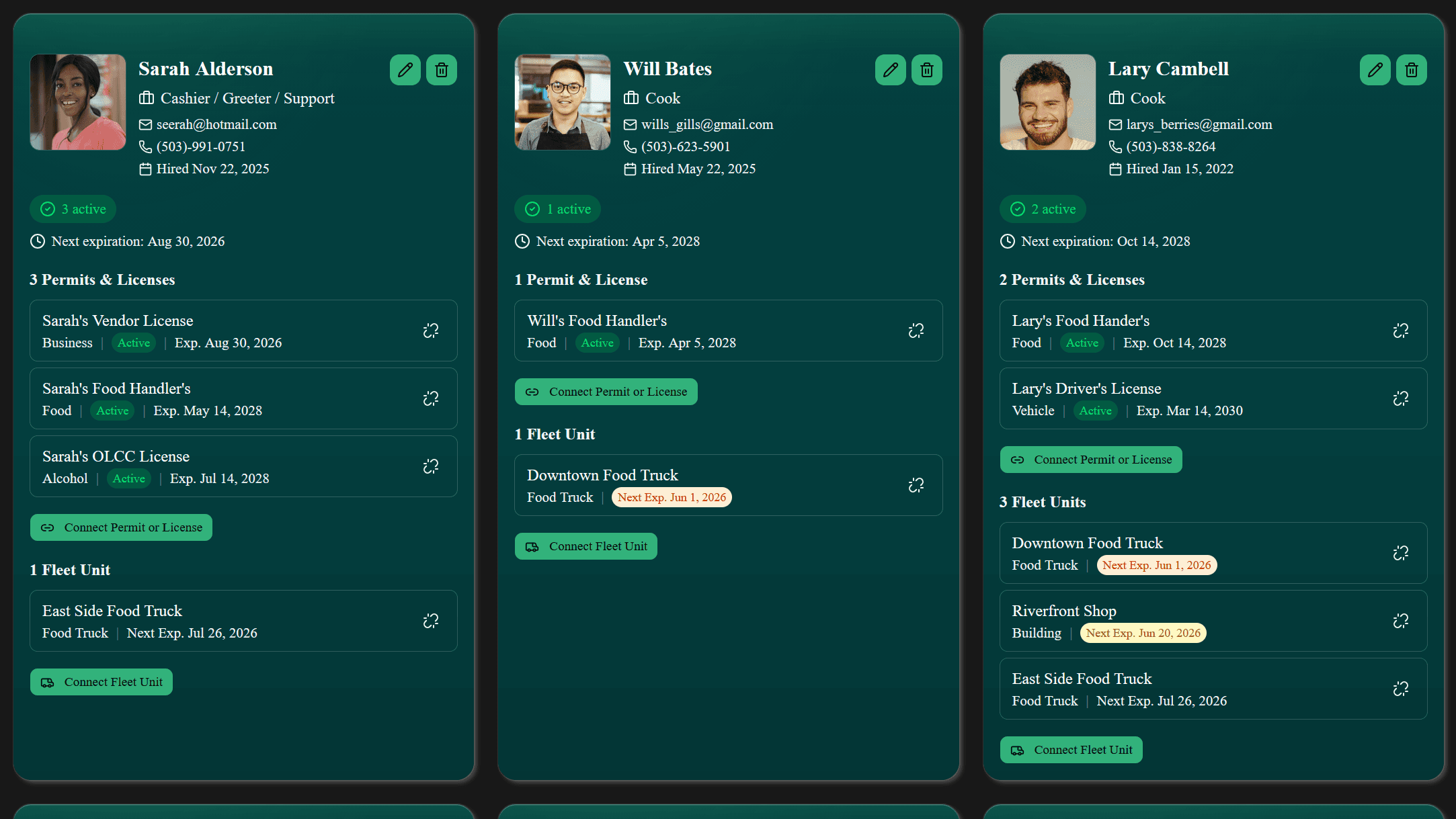
Cards for every server, bartender, and lead cook.
Each staff member gets a card with their ServSafe Food Handler, ServSafe Manager, TIPS, and state-specific alcohol server certifications. Assign them to the events they actually work. When a lead bartender's TIPS expires the week of the gala, the card flags it before the LCB does.
A Thursday at 3 pm
Wedding Saturday. The venue coordinator just emailed for the packet.
The venue manager wants the certificate of insurance with the vineyard listed as additional insured, primary and non-contributory, plus the catering license, the off-premise liquor catering permit, and a current ServSafe Manager certification for the lead chef on site. She wants it before the loading dock code goes out at five.
In CredentiAlert, you open the event, hit Generate Event Packet, type the venue name and the date, and the packet downloads as a single PDF with the current COI from the vault, the catering license, the off-premise liquor permit, and the lead chef's certifications. You email it back at 4 minutes later. The loading dock code arrives an hour later and you're all set.
The same packet, assembled by hand from the insurance broker, the filing cabinet, and the staff binder, costs an emergency COI fee and an hour the chef does not have.
The lowest prices on the market
Comparable platforms charge $43 to $59 per month and only offer 14-day trials. CredentiAlert starts free, forever, and the full-featured Pro plan is under $10.
Select Annual to save ~17%
Looking for unlimited* usage or a custom plan? Contact CredentiAlert at contact@credentialert.com to set up an Enterprise plan that works best for you.
*Unlimited tiers are subject to our Fair Use Policy to prevent spam and abuse.
Frequently asked
The questions we hear from catering operators.
How do I get a temporary food event permit?
Most jurisdictions require a temporary food event (TFE) permit application filed with the local health department two to four weeks before the event. The application typically requires the menu, a site diagram of the booth including hand-washing and three-compartment sink setups, copies of staff food safety certifications, and a fee that ranges from twenty-five dollars in rural counties to over four hundred in major cities. The biggest miss is the lead time. Many caterers file too late, get denied, and lose the event. CredentiAlert tracks the lead time per jurisdiction so the filing happens before the deadline.
Do caterers need a separate liquor license for off-premise events?
Yes in nearly every state. The base catering license covers the kitchen, not the bar. Off-premise alcohol service requires a separate annual off-premise catering permit from the state liquor authority, and many states also require a per-event notification or per-event permit filed in advance. Washington requires per-event filings. California requires the daily license event-by-event. Texas requires an off-premise catering permit on top of the mixed beverage permit. When the bride changes from beer-and-wine to a full bar two weeks out, the permit deadline may already have passed.
What is an additional insured on a catering COI?
An additional insured is a third party (usually the venue) added to the caterer's general liability policy for a specific event. The venue contract typically requires very specific wording, often "Additional Insured, Primary and Non-Contributory," and a coverage amount of one or two million dollars. Each venue COI is custom, and brokers usually charge a per-COI emergency fee on tight turnarounds. CredentiAlert stores the base policy and lets you fire off the request to the broker with the venue name and wording prefilled.
How much notice does the health department need for a catering permit?
It varies widely by jurisdiction. Travis County (Austin) requires fourteen days for a temporary food event permit. LA County requires fourteen days minimum for a community event permit and longer for multi-day events. Seattle King County requires thirty days for a multi-day event. The cost of missing the lead time is the event itself. CredentiAlert tracks the lead time as a property of the jurisdiction, not the operator, so the deadline is flagged the day a new event is booked.
Do all catering staff need ServSafe certificates?
At least one ServSafe Manager (or equivalent food protection manager) must be on-site during all food service operations in nearly every US jurisdiction. The certification is valid for five years. Below that, all food handlers typically need a current food handler card, which is valid for two to three years depending on the state. California requires the card within thirty days of hire. Texas requires it within sixty. Multi-event catering operations often run staff across multiple events on the same day, so each staff member's certifications need to be tracked against the events they actually work.
What happens if a caterer doesn't have a temporary food permit?
The most common outcome is an on-the-spot shutdown by the health inspector. The booth is closed, prepped food is destroyed (or composted, depending on jurisdiction), the caterer pays the entry fee and forfeits the event revenue, and a citation goes into the operator's record at the health department. Repeat citations can result in the suspension of the master catering license. The fine is not the expensive part. The destroyed prep, the lost contract, and the venue blacklist are.
How do you keep track of employee TIPS certifications?
Most caterers track TIPS (or the state-specific alcohol server certification) in a binder or a spreadsheet. The problem compounds with seasonal staff: a banquet server hired for the holiday season may have a current TIPS card on hire day and an expired one by the spring wedding. CredentiAlert stores each staff member's alcohol server certification, flags the expiration before the next event they are booked on, and only assigns currently-certified staff to events that involve alcohol service.
Can a health inspector shut down a catered wedding?
Yes, mid-event, and they have done it. Inspectors regularly attend large public events and corporate galas. If the temp permit is missing, the hand-wash setup does not meet the local code, or any staff member on the line lacks a current food handler card, the booth or buffet line is closed. At a private wedding, the consequences also include the venue blacklist and the reputational damage of a one-star review from a bride who watched her reception fall apart.
Credential Guides
Not sure which licenses your catering business needs?
Every license, permit, and certification a caterer needs, from the kitchen that anchors your license to the events you serve, broken down by state and city. Each one shows who issues it, what it costs, and how often it renews, straight from official government sources.