

Restaurants
Inspector walks in.
Are you ready?
CredentiAlert tracks every permit, license, and food handler card across every restaurant in your group, so a missed renewal never turns into a closed door. Built for indie operators running one to multiple locations.
No credit card required to get started.
What a restaurant group is tracking right now
60+
Unique expiration dates for a five-location group.
Each restaurant carries its own health permit, liquor license, fire inspection, hood suppression cert, sign permit, and often an outdoor seating permit. Add forty employees per location and the food handler cards alone are hundreds of renewal dates. Miss the wrong one and NYC charges up to $10,000 per violation. Most groups track all of it in a spreadsheet that goes stale by month three.
Each restaurant is its own jurisdiction.
The pain is not the permit. The pain is what happens when a restaurant group hits three locations and the spreadsheet stops working.
Each restaurant is its own jurisdiction. Health permit. Liquor license. Fire inspection. Hood suppression certificate. Certificate of occupancy. Outdoor seating permit if there is a patio. Sign permit if the storefront changes. Sometimes a grease trap permit. Each one renews on its own cycle, each one has its own fee schedule, and each one has to be current at every restaurant operating that day.
Krafted Burger Bar let its Illinois liquor license lapse in November 2023. The state caught up in March 2024. Both Elmhurst and Bolingbrook locations were permanently closed by July.
Then there are the employees. A forty-person restaurant turns over at eighty percent annually. Across five locations that is roughly 160 food handler cards to renew or re-onboard each year, on top of ServSafe Manager certifications for every shift, TIPS for anyone touching alcohol, and allergen training in the states that require it. Most groups track this in a spreadsheet that is six months out of date by the time the next inspector walks in.
The operators who get this right are not the ones who check a spreadsheet more often. They are the ones who replaced the spreadsheet with something that does not require checking.
The compliance platforms big enough to handle this are built for chains like Burger King and Tim Hortons. The platforms small enough to afford run thin on the employee side. CredentiAlert sits in the middle, built for the operator with two restaurants who wants the systems of fifty without paying for them.
Every restaurant. Every permit. Every food handler.
Here is what a real multi-location restaurant tracker looks like.
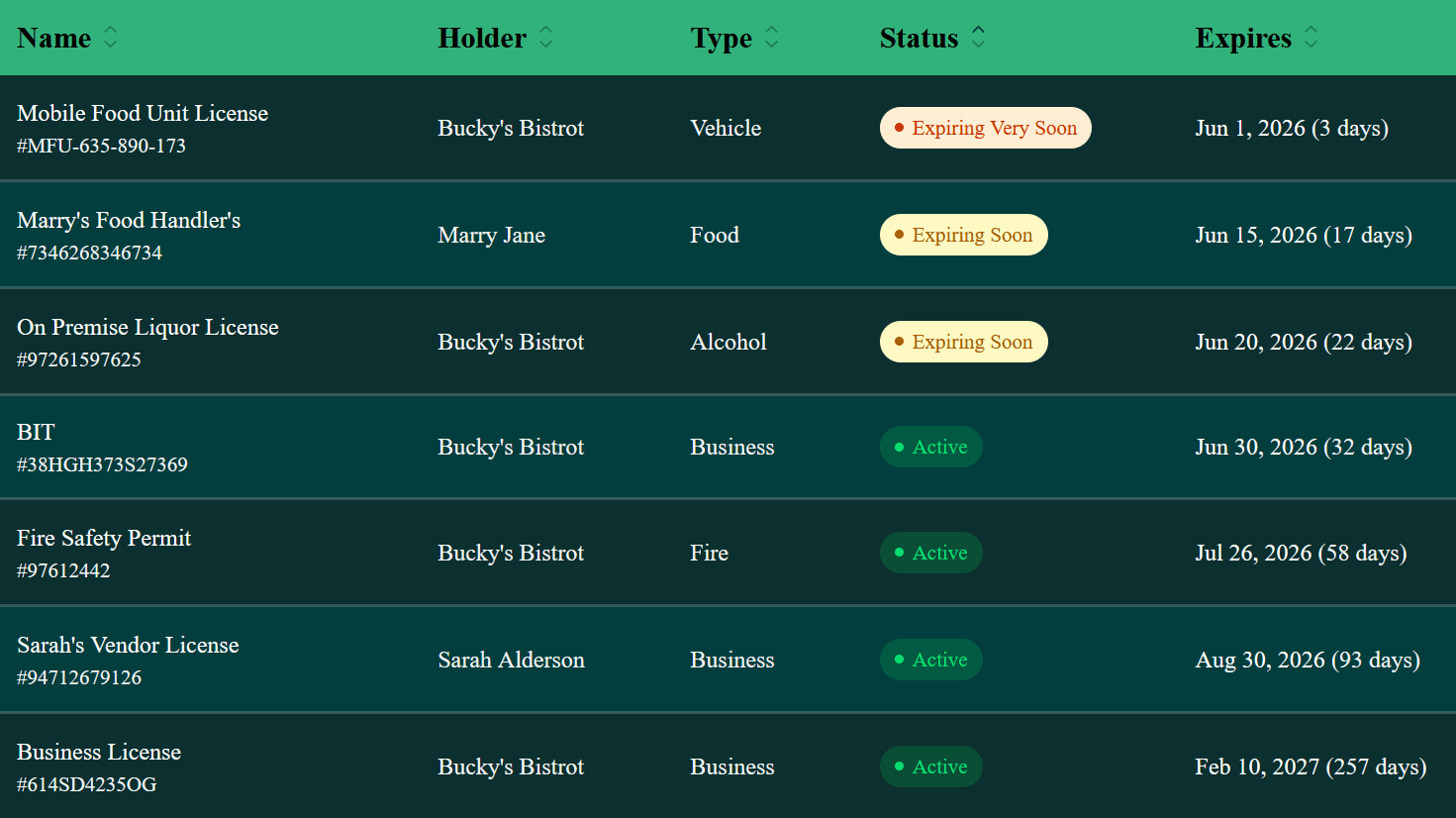
Every permit. Every license. Sorted by what expires next.
All your permits and licenses live in one searchable, sortable list. Color-coded status badges flag what is expiring very soon, expiring soon, or still active. Each row shows the holder (the restaurant or employee that carries it), the issuing agency, and how many days are left. Sort by expiration and the next renewal sits right at the top.
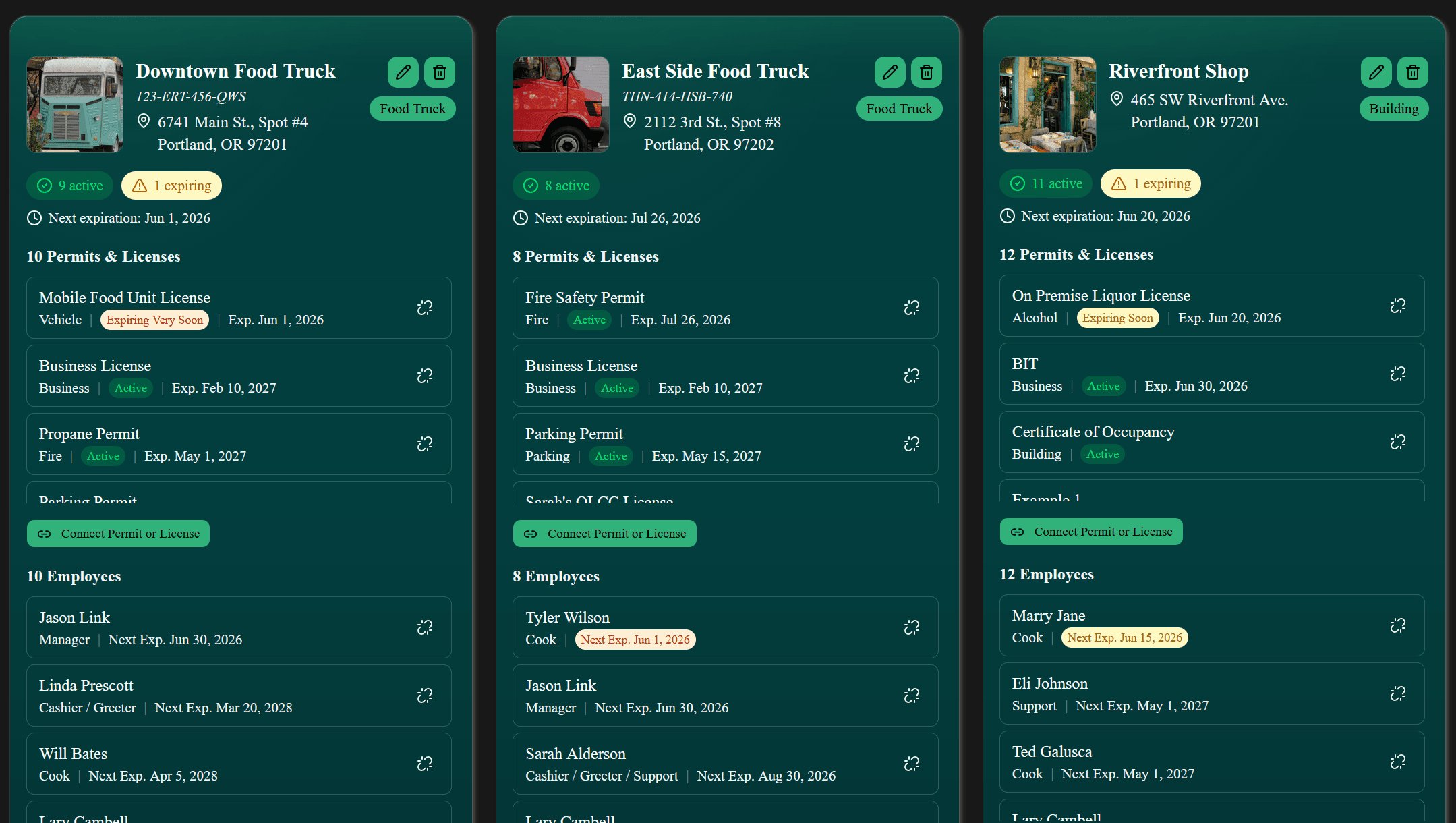
Every restaurant. Every credential. One screen.
Every location lives on the same screen with its current operating status, its assigned employees, and its active credentials. Adding a fourth restaurant does not mean opening a fourth spreadsheet. It means clicking Add Unit and getting back to the line.
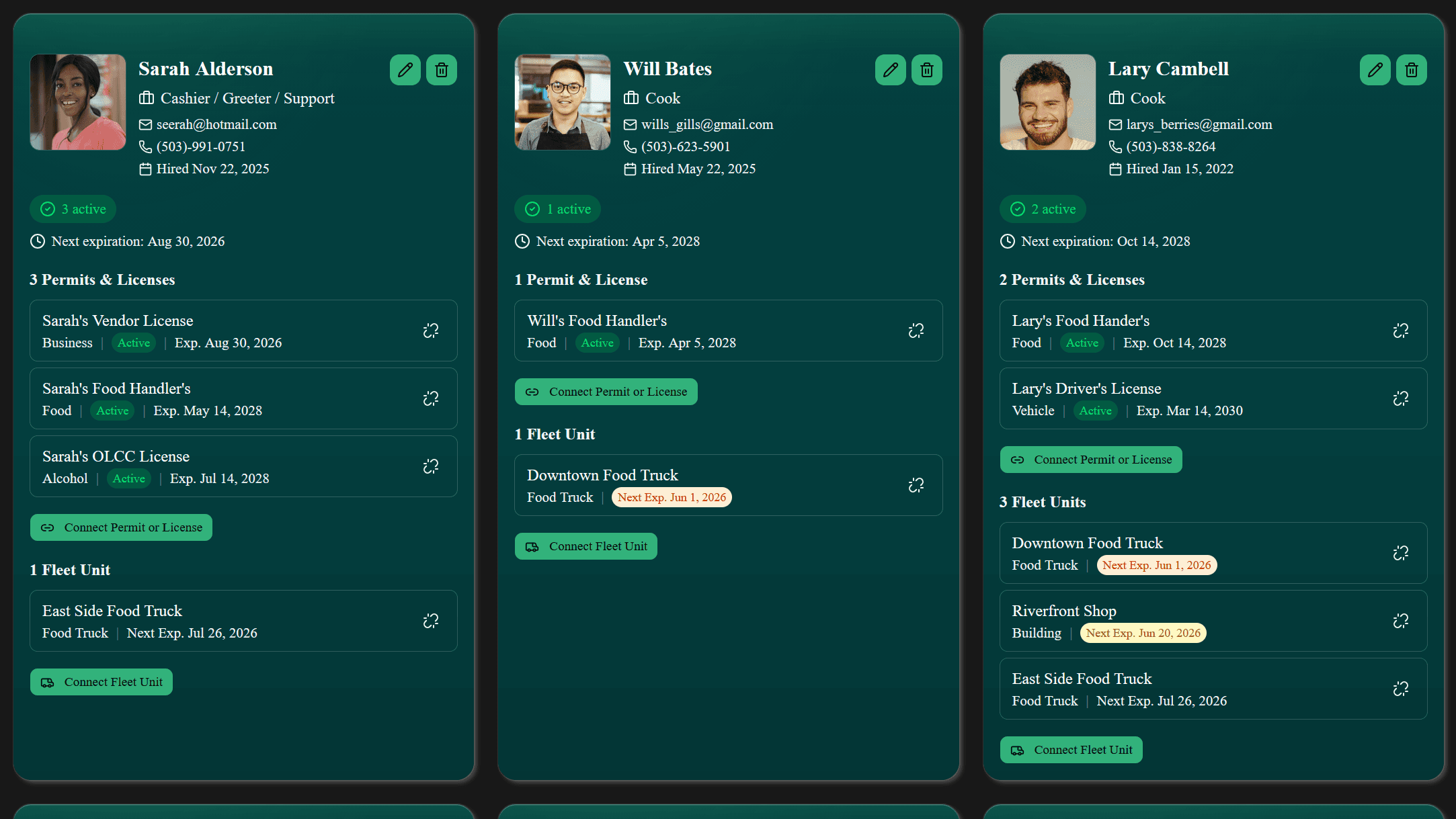
Every employee. Every cert. Every restaurant they work.
Each employee gets a card with their food handler, their ServSafe Manager certification, their TIPS card if they pour alcohol, and any other credential you track. Assign them to the restaurants they actually work, and the dashboard flags expirations before turnover catches up to you.
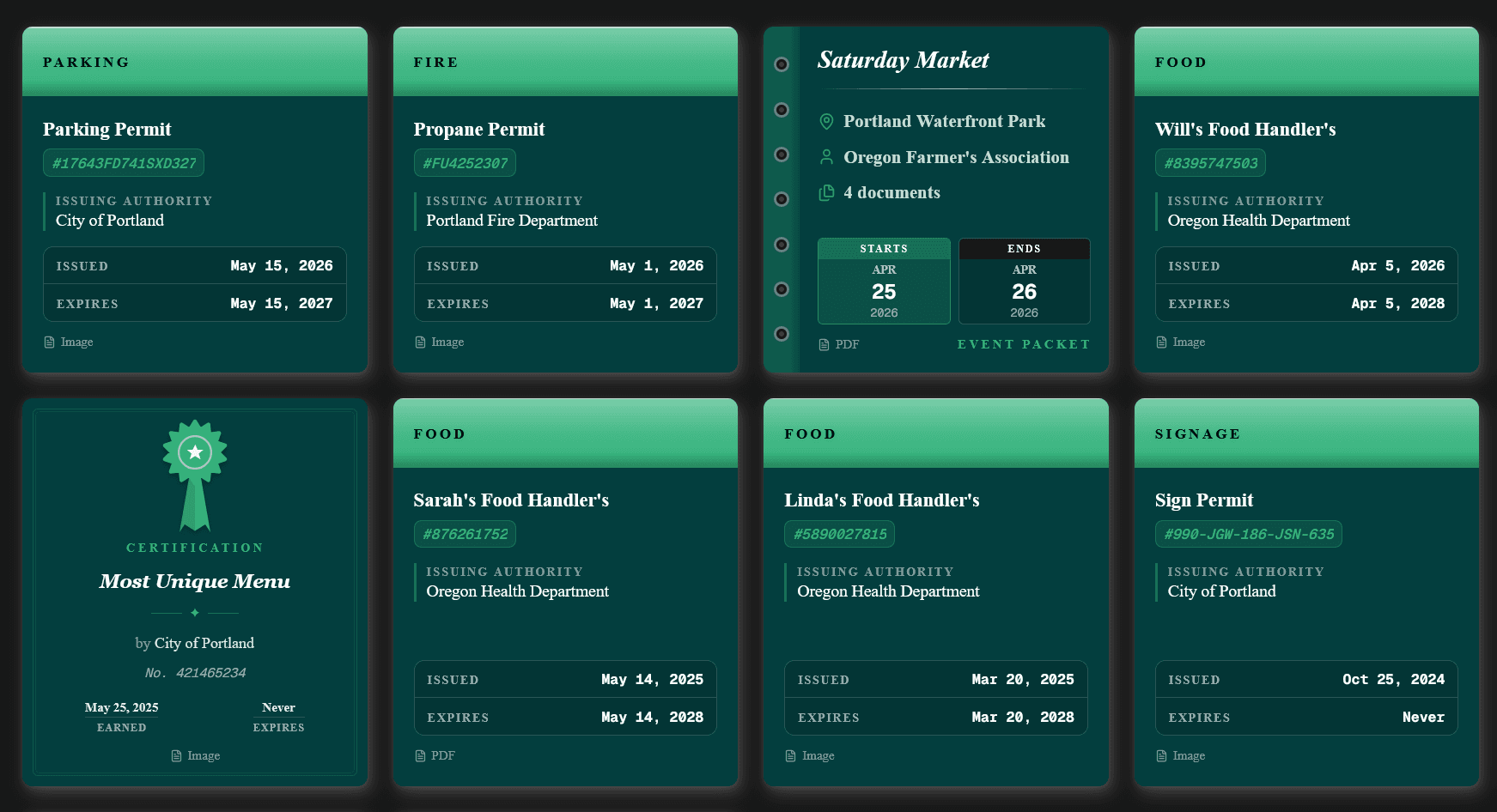
Your paper trail, one search away.
Every permit, license, and certificate you scan or upload lands in the vault. Search by restaurant, by city, or by employee, and the document is there to view or download. No more hunting through filing cabinets when an inspector walks in or an event planner asks for a COI on short notice.
A Tuesday afternoon
Catering inquiry. 200 people. Next Saturday.
An event planner emails about a 200-person rehearsal dinner at a venue across town next Saturday. She needs a certificate of insurance with the venue named as additional insured, a copy of your liquor license, and a temporary food permit application for the city.
In CredentiAlert, you open your catering operations profile, hit Generate Event Packet, type in the venue name, and the packet downloads with a current COI from the vault, a current liquor license PDF, and a pre-filled food permit application. You email it back. Tuesday afternoon, three minutes.
The same packet would have taken your GM an hour to chase down across email, your insurance broker, and the city permit office.
The lowest prices on the market
Comparable platforms charge $43 to $59 per month and only offer 14-day trials. CredentiAlert starts free, forever, and the full-featured Pro plan is under $10.
Select Annual to save ~17%
Looking for unlimited* usage or a custom plan? Contact CredentiAlert at contact@credentialert.com to set up an Enterprise plan that works best for you.
*Unlimited tiers are subject to our Fair Use Policy to prevent spam and abuse.
Frequently asked
The questions we hear from restaurant operators.
What licenses do you need to open a restaurant?
It depends on the jurisdiction, but a typical US full-service restaurant needs at minimum a local business license, a state seller's permit, a health department food service permit, a fire inspection certificate, a hood suppression certificate, a certificate of occupancy, sign permits, and food handler cards for every employee. Add a liquor license if you serve alcohol, an outdoor seating permit if there is a patio, and a grease trap permit in most cities. CredentiAlert tracks all of it in one place.
How often do restaurant health permits need to be renewed?
Most jurisdictions issue food service permits annually, with renewal due on the anniversary of the original issue date. Some larger cities (NYC, LA County) tie renewal to the calendar year. Each location is treated as its own permit holder, so a restaurant group with five locations is tracking five separate renewal dates. CredentiAlert sends renewal alerts sixty days, thirty days, and seven days before each expiration.
What happens if a restaurant operates without a valid health permit?
Immediate suspension is the standard penalty. Health inspectors can post a closure notice on the spot. NYC charges up to $10,000 per violation and requires every outstanding fine to be settled before the annual permit renews. Krafted Burger Bar in Illinois permanently closed both of its locations in July 2024 after one unrenewed liquor license caught up with the operator. The cost of an expired permit is usually far higher than the renewal fee.
How do I track restaurant employee food handler cards?
Most groups use spreadsheets or rely on managers to remember. The challenge compounds with turnover (eighty percent annually in many markets) and multi-state operations where requirements differ. California requires the card within thirty days of hire. Texas requires food manager certifications. Washington requires the card on premises during operating hours. CredentiAlert tracks each employee's certifications, which restaurants they work, and when each card expires.
What is a ServSafe Manager certification and who needs it?
ServSafe Manager is the most common food protection manager certification in the US, accepted by most state and local health departments. Many jurisdictions require at least one certified manager to be on-site during all operating hours. The certification is valid for five years. Multi-location restaurants often need multiple ServSafe Managers per location to cover all shifts. CredentiAlert tracks each manager's certification and which restaurants they cover.
How do multi-location restaurants manage compliance across different states?
Most run a spreadsheet per state, a binder per location, and rely on each GM's memory until something gets missed. CredentiAlert consolidates every location into one dashboard with state-aware tracking. If California requires food handler cards within thirty days and Texas requires manager certifications, the system flags the right credential for the right location. The dashboard rolls up the full compliance status of the entire restaurant group.
Can a restaurant be shut down for an expired liquor license?
Yes, and the consequences extend beyond losing alcohol revenue. State liquor authorities can fine, suspend, or revoke licenses for operating with an expired permit. Bourbon Mill Bar and Grill in Pennsylvania received a forty-five day liquor license suspension and a $5,700 fine in 2025. For a bar-and-grill, that suspension wipes out months of revenue. CredentiAlert tracks every liquor license, every renewal date, and every certified server (TIPS or equivalent) across the group.
What permits does a restaurant need for outdoor seating or catering events?
Outdoor seating typically requires a sidewalk café permit or parklet permit from the city, often with an annual fee and an insurance certificate naming the city. Catering events require temporary food permits from each event jurisdiction, often a temporary liquor license if alcohol is served, and a venue-specific certificate of insurance. CredentiAlert generates an event packet that bundles the COI, liquor license copy, food permit, and any other required documents into a single PDF in two clicks.
Credential Guides
Not sure which licenses your restaurant needs?
Every permit, license, and certification a restaurant needs to open and operate, broken down by state and city. Each one shows the specific details that matter: who issues it, what it costs, and how often it renews, straight from official government sources.